

Home Blog Page 30

Are Your Romantic Expectations too High?

Romantic Expectation

We generally have the expectation that our romantic partners will be supportive when we need them.  From time to time, our subconscious will take inventory of our partner’s successes and failings to see if they measure up to our expectations.

If you find your relationship lacking, here are eight reasons you may be setting standards too high:

  • You are too self-centered.

While we think we will be happier if others behave the way we want them to, there is no rule, nor should there be any expectation on our part that they should.  Scholar George Valliant has studied human happiness and states,” A cardinal rule for happiness is not to think less of ourselves, but to think of ourselves less.” This means you will feel happier if you think about your significant other before you think about yourself.  Your relationship will be more satisfying if you focus on your overall happiness rather than expecting your partner to live up to your unspoken demands.

  • There’s No Commitment

If there is no understood commitment between two people, it is ridiculous to expect partners to make the kind of compromises that are key parts of relationships. You are setting your expectations too high if you want your partner to act as if you are committed when you are not.

  • You’ve Cheated (or Considered Cheating)

If you have been unfaithful or considered being unfaithful, you have no room to claim your partner is making you unhappy.   People who have cheated on their partners often say they strayed because their love didn’t measure up in some way. It is absurd to expect one person to be the sole source of their happiness. It is setting the bar far too high to demand that one person fulfill all of your needs.

  •  You Rely on Them for Your Excitement and Romance

You expect them to do all of the work.   You need to work together if you want a romantic and exciting relationship.  You need to take on some of the responsibility.  Provide some of the adventures you crave, and you will find that both of you are thrilled.

  • You want mind-blowing sex, but don’t work at it.

In a committed relationship, sex can become routine.  This doesn’t have to happen if both partners are willing to work together to keep things interesting.   Communicate your needs to your partner, so they know what you like and need.

  • You aren’t willing to make sacrifices.

If you don’t want to make sacrifices or compromises, you can’t expect your partner to do so. You are setting the bar too high if you want something but aren’t willing to meet them halfway.

  • You Let Technology Get in the Way

Too often, we are distracted by our phones, computers, or televisions. This can keep us from engaging with the person in the same room as us.  Communicating solely through technology can also cause a strain on a relationship. If you have a problem, wait until you can speak to the person rather than relying on texts or emails to push your point forward.

  • You Expect too Much Out of Life.

Your overall expectations are too high if you push yourself to the point of exhaustion trying to reach an impossible goal.  While it is important to have goals, if we expect money, looks, or a perfect home to make us fulfilled and happy, we ultimately will be disappointed. This disappointment can lead us to find our relationships to be lacking.

So, learn to set realistic expectations and talk about expectations with your partner. Make sure they feel safe to share their own expectations so you can help one another.


Personal Mantras: Rewrite Harsh Self-Talk Into a Next Step

An adult taking one step onto a low outdoor stair in a warm coral and charcoal editorial illustration.

Updated

If a personal mantra feels impossible to believe, make it more specific. You do not need to replace “I am struggling” with “My life is perfect.” A useful reminder can acknowledge the difficulty and leave room for one manageable response.

Edit the sentence you actually use

Begin with a line you notice yourself repeating. Write it down once, without collecting a long list of faults. Then work through four small edits:

  1. Locate the event. Replace a judgment about your whole life with the situation in front of you.
  2. Remove absolute language. Words such as always, never and everyone can make a sentence broader than the available facts.
  3. Keep the honest feeling. Frustration or uncertainty does not need to disappear for the sentence to become useful.
  4. Add a choice. End with something you can try, ask, change or decide not to do.

Worked examples

From a sweeping judgment to a practical reminder
First sentence Edited reminder Possible next step
I never finish anything. This project is unfinished; I can choose one part. List the smallest remaining task.
Everyone will think I am foolish. I cannot know every response; I can prepare my question. Write the question before the meeting.
I must feel confident before I start. I can try a small step while feeling uncertain. Spend a few minutes on a reversible first attempt.

These are writing examples, not personalized therapy. Adapt them to your circumstances, and leave a phrase unused if it makes your experience feel dismissed.

Repetition is optional

You might keep the reminder beside a task list or read it before beginning. There is no required count and no need to repeat it until you feel different. The point is to connect a sentence with an action, not to monitor every thought.

In Wood and colleagues’ 2009 experiments, a positive self-statement had different effects depending on participants’ self-esteem, and some participants felt worse. The study does not establish this editing exercise as treatment; it does challenge blanket promises about positive statements.

Check whether the phrase is doing its job

After a few uses, ask whether the reminder helped you identify the task, ask for support or stop an unhelpful demand on yourself. Record an ordinary outcome, such as sending a question or revising a plan. An unfinished goal is information for the next decision, not evidence that you failed to believe strongly enough.

A personal phrase also cannot remove structural barriers, pay a bill or control another person’s choices. Practical support belongs beside reflection, and persistent distress deserves qualified care rather than more pressure to think correctly.

Make room for creativity too

If writing works better than repeating a sentence, try a paragraph, a sketch or a draft you do not plan to share. Our article on songwriting, flow, memory and intuition explores creative experience without requiring a supernatural explanation. A reminder can open a little room to work; it does not have to explain everything about you.

The Importance of Your Dreams

The Importance of Your Dreams

We all know that dreams are otherworldly. We are right to be baffled by the significance of our dreams, especially since they can shift focus and meaning, seamlessly confusing us. Nevertheless, our dreams are fascinating and can be so vivid and compelling that surely they must have some meaning.

You must pay attention to your dreams to understand your feelings and even yourself.  Pay attention to what your mind is opening up to you.  In dreams, the opportunities are limitless.  They are a playground for your imagination.  To get them most out of the dreams, you should record them. Try keeping a dream journal and doing some research into lucid dreaming.

Dreams can help you have fun with the facets of your life. Dreams can affect your mood, so make the most of them.

You can also look at dreams as a way to gain knowledge. They can also provide you with information as you learn to interpret their symbols. Some even say that our dreams are the most honest our brain can be since it gives our subconscious to stretch and flourish.

This is another reason to learn what our dreams can mean.

Dreams can mean many different things. This is because we first have to understand how our brain makes an association.  Dreams can have many meanings in just one symbol.   This can also change if you are ill or under the influence of medication or alcohol.

Since you are the only one who can assign meaning to your associations, you are the only one who can determine what they mean. Dream dictionaries can help as guidelines to help you figure out the meanings for yourself.   A good way to start this is by recording your dreams. Once you get into the habit of recording the dreams, you can start to see a pattern in your dreams and can begin to interpret them.

You can understand dreams by learning more about your subconscious’s messages.   Pay attention to things that are plaguing you in your waking life and record your subsequent dreams.  Your dreams are important to life, so make the most of them.

What is I Ching and its History?

I Ching

The oracle of the Chou people, the Chou I, came to be when the Chou were trying to overthrow the Shang dynasty.  There was social and spiritual turmoil at this time, and it is said that a total solar eclipse on June 20th, 1070 BC gave the Chou king Wu the perfect opportunity to invade.   The Chou I eventually evolved into the I Ching.

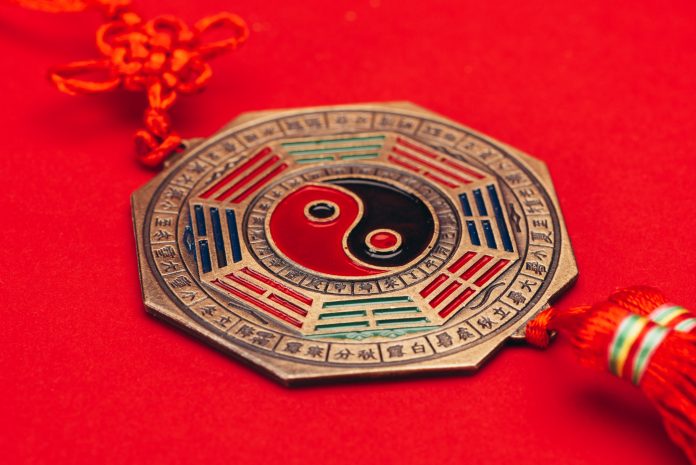
The I Ching called the Book of Changes in English, is the representation of sixty-four archetypes in six line combinations of yin and yang. These combinations are called hexagrams. For example, Yin/Yang, represents the duality of the universe and creates the dynamic tension that shapes all of the changes in the world.

Examples of yin/yang are female and male, the heavens and the earth, dark and light.  The descriptions of the energy of humanity can be interpreted by the sixty- four hexagrams.  The hexagrams can be analyzed in different ways.  First, they can be divided in half to get trigrams that are representative of the fundamental elements; sky, earth, thunder, water, wind, and fire. These trigrams help establish the points in Feng Shui, the ancient art of placement.

In addition to this, the I Ching is the most ancient of all divination tools.  It is one of the oldest books in the world.  It was composed in or around 1000 BC.   Its ancient and early history is legendary.

One of the myths of the origins of the I Ching involves the first emperor of China, Fu His. He is said to have watched a turtle emerge from the Yellow River.  He knew that wisdom comes from observing nature and noted the eight symbols on the back of the turtle.   This led him to the realization that the trigrams were reflective of the movement of energy in life on Earth.

Fu Hsi contemplated other patterns in nature through animals, plants, meteorology, and his own body.   His myth tells how his understanding of the connection of all things through yin and yang led to his interpretation of the trigrams.

Early Chinese divination involved tortoise shells being heated over a fire until they cracked so the emerging patterns could be read.  Some of these shells were stored for reference, along with the interpretations. These can be seen at the National Museum in Taiwan, China.

Yet another myth describes an ancient clan of female diviners who read the shells of live turtles.  The myth states that they became queens and royalty in the Shang Dynasty. The Dynasty was considered mythological until archeologists unearthed relics in 1899.  Lao Tzu, the founder of Taoism, is said to be descended from this group.

Taoist and Confucian traditions say that combining the possibilities of yin and yang with Chinese creation myths created the I Ching.   This combination made the eight trigrams emerge.

The first I Ching interpretations were authored by King Wen towards the end of the Shang dynasty when he was imprisoned by the emperor Zhou Wang.  Wen used his meditations on the trigrams.  This mediation took Wen to a heightened mental state, and he assigned each hexagram a name and a meaning.   His son  King Wu added more interpretations, bringing the I Ching to its present-day form.

Confucius was I Ching’s greatest supporter, and he added his own wisdom to the interpretive texts.  He uses  I Ching as a resource for living a life of high virtue, not a divination system.  He wanted to live his life studying the I Ching.

Evidence states that the Book of Changes and its hexagrams are part of an ancient oral tradition that was part of Chinese history before the written word.  According to this, the basics of the I Ching were composed in the eighth century BC.

Using the hexagrams for interpretations didn’t happen until the fifth century BC. During the period known as the Warring States period, the I-Ching written texts were put into a book. To make them easier to review and share.   It was spared the book burnings of the Ch’in Dynasty; it was considered a great piece of literature.

The Book of Changes was studied intently and canonized during the Han Dynasty.

Additions were made at the turn of the millennium. These additions regarded the individual lines of the hexagrams and the definitions of the trigrams.  The commentaries are attributed to Confucius.   After that, more changes were made, and it came to resemble today’s I Ching.

Chinese rules and the general public used the I -Ching before printing was available by weaving it into their culture. The influence of the Book of Changes has greatly influenced how the Eastern world is viewed. Over the last century, Western Culture has been exposed to the basics of Taoism.  Carl Jung explained the value of of the I Ching’s psychological validity. This led to the Western World’s acceptance of the I Ching.

Today, the I Ching is consulted by tossing three coins six times to create the hexagram. This is much simpler than the tradition of casting fifty yarrow stalks to divine the hexagram. After the coins/stalks are sorted out, the sacred book is consulted to discern the meaning.

Advanced I Ching Oracle – Psychics

Dream Facts: 15 Questions About Sleep, Recall and Meaning

Editorial illustration of a sleeping adult beside a soft abstract sequence of dream fragments and a morning notebook.

Updated

Dream facts are most useful when they distinguish what sleep researchers observe from what we personally make of a dream. REM sleep, remembered dream reports and symbolic interpretation are related topics, but they answer different questions. A measurement of a sleep stage cannot decode the meaning of a particular image.

How to read the answers

The physiology and recall answers below draw on NHLBI’s explanation of sleep phases and the NINDS sleep guide’s section on dreaming. NINDS says the exact purpose of dreaming is not known. Keep that uncertainty in view when an online list presents every theory as a settled fact.

The practical answers about interpretation and record keeping are editorial suggestions. They do not promise better sleep, a particular dream or a paranormal ability. For ordinary bedtime habits, consult NHLBI’s healthy-sleep guidance. For physical dream enactment, such as kicking or punching while asleep, Mayo Clinic advises talking with a doctor.

If a dream leaves you judging yourself harshly, the examples in our guide to realistic personal mantras can help you put a thought into less absolute words. If you discuss dreams with a paid reader, use our ethical-reading checklist to clarify consent, costs and limits.

Frequently asked questions

1. Do dreams only happen in REM sleep?

No. NINDS describes dreams in all stages of sleep, with the most vivid dreams usually occurring during REM. A dream report does not by itself tell you exactly which stage you were in.

2. What does REM mean?

REM stands for rapid eye movement. It is a sleep phase with characteristic eye movements and brain activity. The name describes observable features of sleep; it does not describe a level of spiritual awareness.

3. Does the brain switch off while we sleep?

No. Brain activity changes across sleep stages rather than simply stopping. NHLBI notes that activity measured in REM sleep resembles waking activity. Being active does not mean the sleeping person is consciously choosing every part of a dream.

4. Is REM sleep the same as deep sleep?

No. In the standard sleep-stage description, deep or slow-wave sleep is stage 3 of non-REM sleep. REM is a separate phase. Calling every vivid dream “deep sleep” mixes up these terms.

5. Why do dreams sometimes seem especially vivid near morning?

NHLBI explains that people usually have more REM sleep later in the night, and NINDS describes REM dreams as usually the most vivid. These observations offer context; they do not explain every individual morning dream or establish its meaning.

6. Does not remembering a dream mean I did not dream?

No. Dreaming and recalling a dream are different things. NINDS notes that people may not remember most of their dreams. There is no need to invent missing details just to fill a diary entry.

7. Does everyone forget exactly 90 percent of a dream in ten minutes?

Do not treat that popular number as a universal rule. A claim that precise needs a traceable study and a clear measurement method. The NINDS overview says much dreaming is not remembered, without giving that ten-minute rule.

8. Can experiences from the day appear in dreams?

Yes. NINDS describes daytime events entering dreams. Recognising a connection can be interesting, but it does not establish that a dream faithfully records an event or reveals another person’s private thoughts.

9. Do dreams always have a single discoverable purpose?

The exact purpose of dreaming remains uncertain. NINDS discusses emotional processing as a possibility. That is different from proving that every dream has one hidden message that a reader or dream dictionary can uncover.

10. Do people only dream in colour?

No. NINDS notes that some people dream in colour and others recall dreams in black and white. The colour you remember is a feature of your report, not a test of whether you have a special ability.

11. Can a dream prove that something will happen?

A remembered dream alone is not enough to establish a prediction. Before calling a match evidence, consider the original dated account, how specific it was, what did not match and whether you changed the interpretation after the event.

12. Does an upsetting dream make me responsible for its events?

A dream is not the same as a deliberate waking action. You can reflect on the feelings it raised without treating its plot as a confession. Judge your conduct by the choices and actions you make while awake.

13. Is keeping a dream diary necessary?

No. It is optional. If you enjoy it, briefly note what you remember after waking naturally, mark uncertain details and keep interpretations separate. You can leave a blank entry or stop if the exercise becomes upsetting or burdensome.

14. When should I ask a doctor about dreams?

Discuss dreams or sleep problems that repeatedly disrupt rest or daily functioning with a healthcare professional. Mayo Clinic specifically advises medical discussion of dream-enacting symptoms such as kicking or punching during sleep. Do not diagnose a sleep disorder from a dream theme.

15. Should I interrupt sleep to collect more dream reports?

This guide does not recommend sacrificing sleep for a fuller dream diary. NHLBI advises making enough time for sleep and keeping a consistent schedule. A few notes after natural waking are enough for an optional personal record.

Finding Your Path to Success

Finding Your Path to Success

Finding the best career for yourself is difficult, leading to the perfect life.  The only way to ensure this is through focus, commitment, and dauntless effort.  Overall, success will be the best reward.

What would you do to obtain the perfect life?

The happiest and most fulfilled have found the best job that suits their skills and goals.  However, you may not find happiness in that type of life.   The best life is as different and varied as people themselves, but it is not impossible. Through hard work and dedication, anyone can obtain their best life, and this path won’t be easy.  

  • Look for change

Many put things aside because they don’t want to do them.  If you find yourself avoiding things at work, it may be time for a new job.   One thing that holds people back is the unwillingness to recognize when they are heading in the wrong direction. As hard as it is to face, being trapped for years in the wrong career is much worse.

  • Starting on the path

Everyone has to begin their journey somewhere, and depending on your talents and abilities, you may find yourself starting over at the beginning.  This may feel disappointing but congratulate yourself on taking charge of your life, staying focused, and heading forward. Don’t get in your own way, and keep working.

  • What do you call success?

Only you can define what total success is for you.  Set aside time to establish what that is and define what you need.  A good way to do this is to ask yourself what leads to happiness for you.   Don’t pay attention to what the rest of the world says. Really think about it. Discovering what happiness means to you is an important first step.

  • Determine your goals

Once you have established what you need to be happy, you should set a goal. Then figure out the best way to reach this goal.  Set something specific to accomplish, and don’t forget to add some celebrations along the way.

  • Don’t be afraid to take a risk

Far too often, we are held back by being overly concerned with what others think of us.   This kind of behavior keeps us from exploring what will make us truly fulfilled and happy.  Take a chance at your happiness and do whatever you need to reach your goals.

  • Forgive yourself

If you are truly taking risks, you will have to face some failures. The best way to handle this is to see your failures as lessons. Don’t see your stumbles as falls.  Instead, look at them as a means of reexamining your path.

Online Career Advisor: Live Psychic Career Advice 24/7