

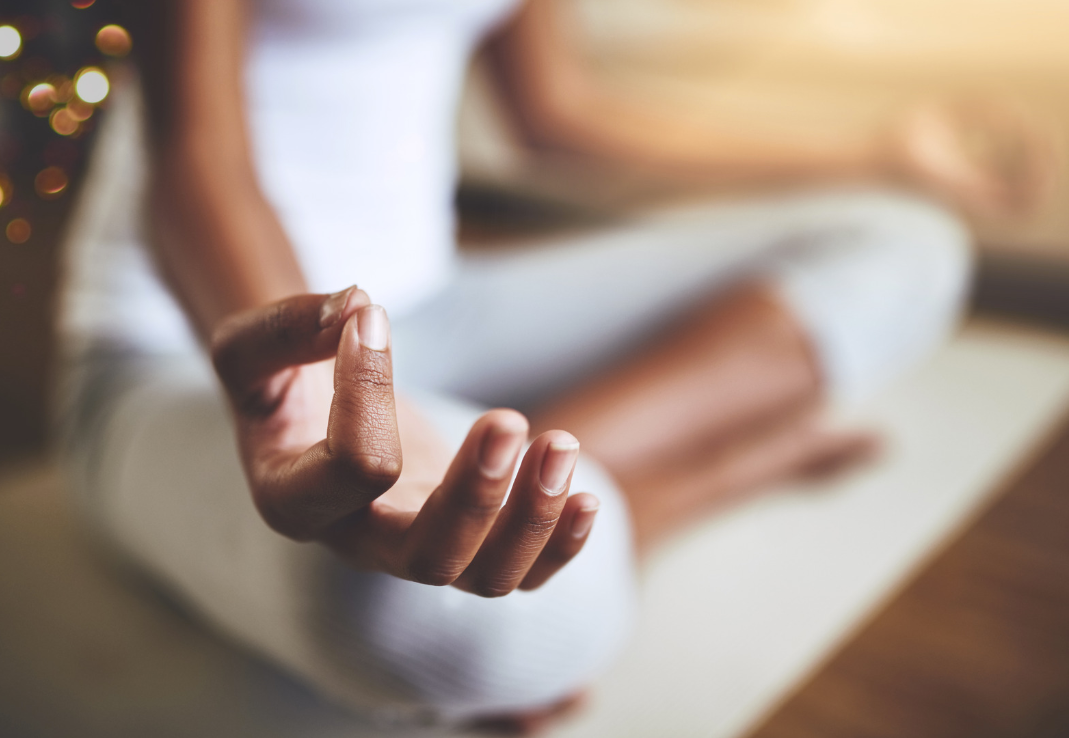
Meditation can begin with an ordinary act of attention: noticing a sound, looking at an object or feeling a comfortable breathing sensation. Choose one focus, notice when your attention moves and return when you can. A busy mind is part of the exercise.
You can try a short practice while keeping your eyes open and sitting in a chair. You do not need a special experience, a blank mind or a particular spiritual belief to use the beginner exercise below.
Quick guide
- Choose a safe pause when you can put other tasks aside.
- Use a supported position and a focus that feels manageable.
- Let breathing remain natural; a sight or sound is an alternative.
- Notice wandering attention without trying to erase thoughts.
- Finish when you choose, including earlier than planned.
What you are practising
A concentration practice gives attention one place to return to, such as a sound or an object. Mindfulness includes noticing thoughts, feelings and the surroundings as they occur. These ideas can overlap: you may notice a thought and then return to your chosen focus.
The NHS guide to mindfulness explains that the aim is not to make thoughts disappear. It describes recognising thoughts as mental events that come and go. You can notice “I am planning dinner” without solving dinner during the practice.
You are also free to stop and deal with something that needs attention. Ignoring a person who needs your help, an alarm or a real-world responsibility is not a requirement of meditation.
A first session in five steps
If a time limit helps, try one to three minutes as a manageable experiment. That means 60 to 180 seconds; it is an optional practice window, not a proven dose for a health benefit. A timer is optional, and a shorter session is still finished.
- Make room for a pause. Choose somewhere safe to sit or rest while you are not driving or doing an attention-critical task. Reduce an avoidable interruption if practical; complete silence is unnecessary.
- Settle comfortably. Let the chair or another suitable support take your weight. Keep your eyes open, lower your gaze or close them if comfortable. There is no need to hold a difficult pose.
- Choose one focus. Pick an ordinary sight, sound, contact sensation or comfortable breathing sensation from the menu below. Avoid staring at a bright light or using a candle flame.
- Notice and return. When a thought, sound or feeling draws your attention, notice that it happened. Return to the focus if you want to continue. You may repeat this many times without restarting the session.
- Finish deliberately. Look around, notice what you will do next and return to your activity. You can adjust your position first. No particular feeling is required before you finish.
Choose a focus you can comfortably return to
Try one option for this session. The descriptions are choices, not a ranking of techniques or a test of concentration.
Sight: an ordinary object
Let your gaze rest on the edge of a mug, a door handle or another familiar object. Notice its outline or colour without straining your eyes. Look elsewhere whenever you need to.
Sound: what is already around you
Notice a steady background sound at a comfortable volume. You do not need headphones or a special recording. Let a change in the sound be something you notice rather than an interruption you must eliminate.
Contact: a supported position
Notice your hands resting in your lap or another comfortable point of contact with the chair. Choose a different focus if paying attention to the body feels unpleasant or distracting.
Breathing: only if it suits you
Notice an easy breathing sensation while breathing normally. There is no instruction to deepen, slow, hold or count breaths. If breath focus is uncomfortable, use an external focus or end the exercise.
What to notice without grading yourself
You might spend a session noticing how often attention moves. Another time you may stay with a sound for a while. Neither outcome provides a score for how calm, spiritual or capable you are.
A thought such as “I cannot do this” can be noticed in the same way as a plan or memory. You can return to the exercise, change it or finish. If a more workable reminder would help, our personal-mantra guide shows how to turn harsh self-talk into a specific next step.
Deep absorption is another experience people sometimes seek. Being absorbed in music or a creative task does not need to become the target for every meditation session. Our discussion of songwriting, flow and attention explores that different kind of experience.
Three adjustments for an ordinary first attempt
1. Your mind keeps planning a task
Notice “planning” and return to your focus if you choose. If you genuinely need to remember something, finish the pause, write a short reminder and carry on with your day. You do not need to repeat the practice to make up for the thought.
2. The room has background noise
You can choose a sound as the focus or keep using an object while noticing the noise around it. If the noise requires action, take that action. A workable place matters more than forcing yourself to ignore the room.
3. You are uncomfortable or very tired
Change position, open your eyes, choose another activity or rest. Stop if the practice is increasing distress. Finishing a planned duration is not more important than responding to what you need.
Next step: keep one adjustment that made the activity more manageable. You can also decide that a quiet sitting practice is not useful for you at present.
What about relaxation and health benefits?
Some people practise meditation to relax or support their wellbeing. A particular session may leave you calmer, distracted, unchanged or ready to do something else. Its outcome cannot establish that your blood pressure, immunity, cortisol level or brain function has changed.
The National Center for Complementary and Integrative Health overview describes research on several meditation and mindfulness practices. It also notes that much of the research is preliminary or difficult to interpret and may have been described too optimistically. Findings from a structured programme do not guarantee the same result from this short beginner exercise.
The NHS notes that mindfulness helps some people but is not right for everyone and can make some people feel worse. NCCIH also describes reports of negative experiences and limits in safety research. Stop or adapt a practice that feels unhelpful, and seek appropriate professional support for persistent or concerning distress. Meditation should not replace conventional care or delay a health assessment.
Keep the next attempt simple
If you want to try again, choose an available pause rather than adding a demanding schedule. You might use the same chair and object, or choose a different focus. Missing a session does not require extra practice later.
Afterwards, ask one practical question: “Was there anything I would change next time?” A note such as “the chair was uncomfortable” or “sound was easier to notice than breathing” is useful information. You do not need to grade the session or track every thought.
A course or teacher is optional. If you choose instruction, ask about the teacher’s training, the approach, adaptations, costs and how they respond when someone wants to stop. A promise of instant enlightenment, guaranteed health improvements or psychic powers is not a reason to purchase a course.
A fictional example: finishing without a perfect session
Mara sits in a supported chair during an available break. She chooses the shape of a door handle because she does not want to watch her breathing. Thoughts about an unfinished task keep appearing. She notices them and returns to the handle a few times.
She finishes before her optional timer sounds, turns it off and writes the task on her list. She is still thinking about work. Her next decision is simply whether to use a quieter location or skip the sitting exercise another day.
Key takeaways
- Begin with a manageable focus and a supported position.
- Wandering thoughts can be noticed without being suppressed.
- Open eyes, external sounds and ending early are available choices.
- A short session is an experiment, not a test or a guaranteed treatment.
Frequently asked questions
1. Do I need to stop thinking to meditate?
No. You can notice thoughts and return to a chosen focus. You do not need to force the mind to become blank or restart whenever attention wanders.
2. Must I close my eyes or sit on the floor?
No. A supported chair and open eyes are options for this beginner exercise. Choose a position and gaze that feel comfortable, and change them or stop when needed.
3. Is one to three minutes enough?
It can be a manageable window for trying the activity. It is not a universal therapeutic dose or a minimum you must complete. You can finish earlier without making up time.
4. What if focusing on breathing is uncomfortable?
Choose an ordinary sight or a comfortable background sound instead, or end the exercise. You do not need to deepen, hold or change your breathing to complete this practice.
5. Do I have to meditate every day?
No daily schedule is required here. If you want to repeat the practice, choose an available pause that does not displace needed rest or responsibilities. Missing it does not create a debt of practice time.
6. Do I need a mantra, candle, app or course?
No. An ordinary object or sound can provide a focus. A phrase, recording or teacher is optional; check an offer’s approach, costs and limits before paying.
7. Will this practice lower my blood pressure or improve immunity?
This beginner exercise cannot promise those results. Research on varied meditation programmes does not establish a guaranteed health effect for an individual short session. Keep health concerns and treatment decisions with qualified care.
8. Should I continue if meditation makes me feel worse?
Stop or change the activity instead of pushing through distress. Seek appropriate professional support for persistent or concerning difficulties. Meditation should not replace care or delay a health assessment.